Showing posts with label POE2 Currency. Show all posts

Wednesday, December 3, 2025

Path of Exile 2: How to Buff Chayula Monk

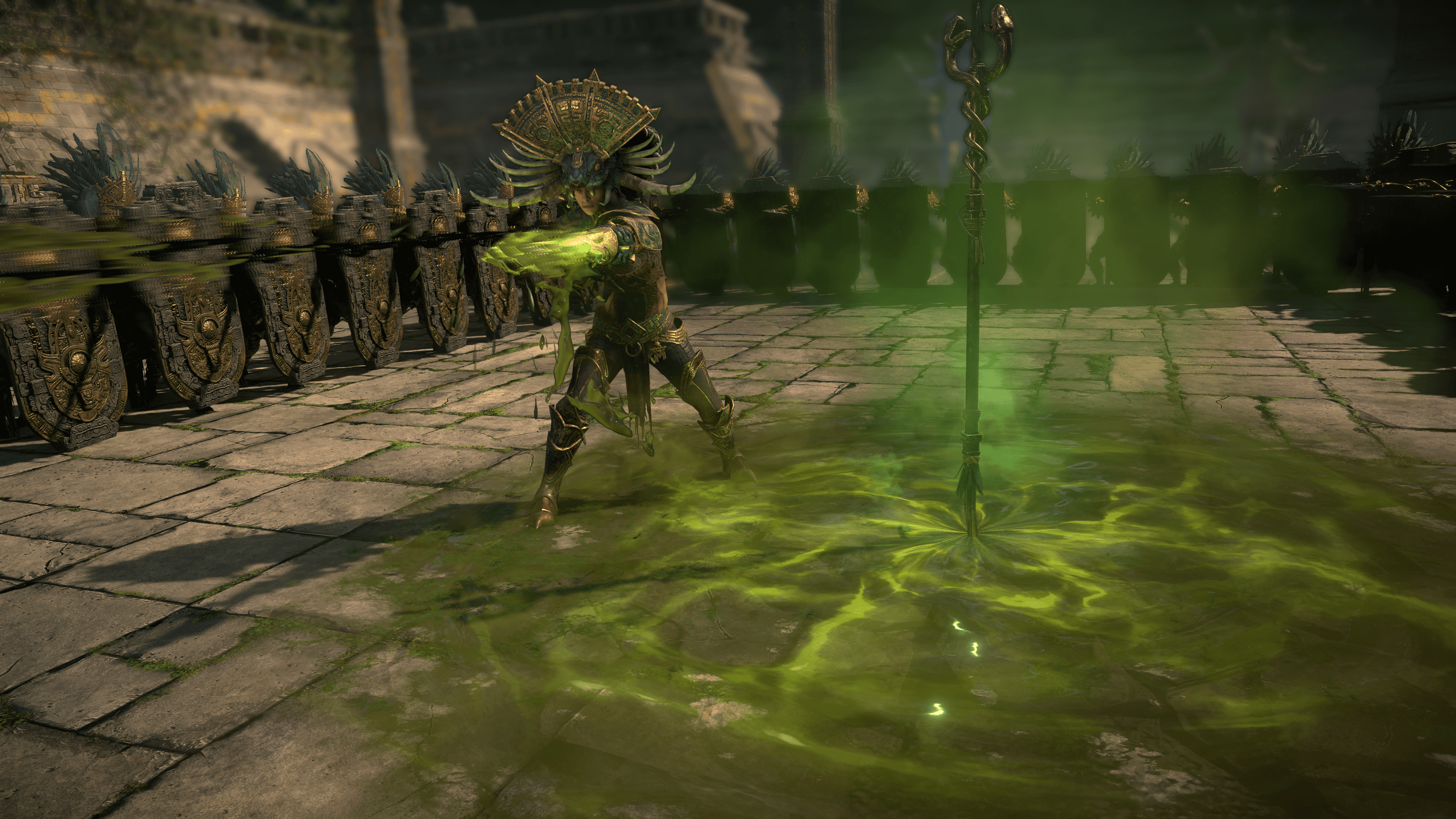
The Chayula Monk archetype in Path of Exile 2 has quickly become a fan-favorite for players who enjoy a blend of evasive tankiness, escalating damage, and POE2 Currency a rhythmic melee playstyle supported by counterattacks and stagger mechanics. But like many melee builds in PoE2's early iterations, the Monk can feel underwhelming without careful investment into a few core layers. Buffing a Chayula Monk isn't simply about stacking flat damage - it's about sharpening its identity: fast counterstrikes, high uptime on mitigation, and leveraging Chayula-themed chaos scaling. Once these systems start overlapping, the build shifts from "fine" to "formidable."

1. Strengthen Your Core Chaos Scaling

Most Chayula setups center around Chaos Conversion or Chaos Added Damage. The reworked damage formulas in PoE2 reward consistent scaling, so prioritize the following early:

% Physical as Extra Chaos Damage on amulet, rings, and gloves

Flat Added Chaos Damage from weapons (especially if using fast one-handers)

Critical Strike Chance and Multiplier for Chaos Damage from passive wheels

If your weapon doesn't naturally support heavy chaos scaling, fix that first. PoE2's vendor-crafting and bench affixes allow early-tier chaos mods that create massive breakpoints in your damage. A Chayula Monk with weak chaos rolls is essentially a normal Monk with purple particle effects - so treat the chaos layer as mandatory.

2. Improve Survivability Through Stagger and Dodge

The Monk's defensive identity comes from Stagger, Dodge, and Counterattacks. To buff the build properly:

Stack Stagger Duration and Stagger Strength to keep enemies interrupted longer.

Prioritize gear with Dodge Chance, Evasion, and Reduced Damage Taken While Countering.

Get skills and passives that improve Counterattack frequency - more counters means more mitigation and more uptime on your Chayula damage procs.

A Monk that cannot reliably stagger enemies will take unnecessary chip damage in high-tier content. Increasing Stagger Strength is one of the largest power spikes for the build.

3. Optimize Your Chayula Emblem & Aura Setup

Many players underrate aura synergy. The Chayula Monk especially benefits from:

Malevolence - huge multiplier for chaos-based builds

Grace - dodge/evasion layers pair beautifully with Monk scaling

Discipline or Determination (depending on your gear) for smoothing incoming damage

If you can secure reduced mana reserve or increased aura effect, your overall EHP and chaos output jump significantly. Avoid reserving so much mana that you cannot counter freely; the Monk's kit suffers if you float near empty.

4. Speed Matters More Than You Think

A Chayula Monk feels best when it flows - movement speed and attack speed are core to buffing the build.

Focus on:

High attack speed for more procs and faster stagger

Movement speed on boots, plus occasional flask uptime

"Counterattack Speed" on passive clusters or gloves

Many players mistakenly over-invest in raw damage clusters; however, boosting speed improves both your offense and your defense simultaneously.

5. Upgrade Your Weapon Frequently

Chayula Monks depend heavily on weapon progression. Replace your weapon more often than you think:

Look for a high APS base

Roll prefixes with chaos conversion or added chaos

Ensure attack accuracy stays high to avoid DPS drops

Even a modest increase in weapon quality translates to a large DPS boost because several Monk mechanics scale off your "recent hit" values.

6. Embrace Counterattack-Based Playstyle

The most distinctive buff to this build comes from embracing reactive damage:

Use abilities like Retaliate, Palm Strike, or similar Monk counters

Scale Counterattack Damage and Counter Frequency

Incorporate nodes that boost "Damage After Dodging"

The more enemies strike at you, the stronger your damage loop becomes. The Chayula theme encourages tanking hits indirectly through dodge and stagger, not through raw armor or life stacking.

Final Thoughts

Buffing a Chayula Monk in Path of Exile 2 is about layering chaos scaling, stagger effectiveness, counterattack synergy, and buy POE2 Currency​ movement fluidity. Once these layers synchronize, the build feels like a whirling shadow monk - elusive, disruptive, and hitting harder with every counter. Invest in speed, stagger, chaos damage, and weapon progression, and the Chayula Monk becomes one of the most stylish and lethal melee options in PoE2.

Thursday, November 27, 2025

How to Make Flicker Strike Builds in PoE 2

Flicker Strike has always been one of the wildest melee skills in Path of Exile, and in PoE 2 it remains exactly what players expect: brutally fast, unreliable unless carefully supported, and POE2 Currency dependent on a steady engine of Frenzy Charges, cooldown bypassing, and high single-target output. The skill looks simple on paper-"teleport to an enemy and attack repeatedly"-but actually building around it is a miniature engineering project. The players who pull it off do so because they understand three major pillars: charge generation, cooldown management, and defenses for a hyper-aggressive playstyle.

1. Building the Frenzy Charge Engine

By far the biggest question every Flicker Strike player asks is: How do I keep this thing running?

Unlike PoE1's version, PoE 2 emphasizes more predictable charge-generation tools, but you still need a loop that never collapses.

Players typically combine at least two independent sources of Frenzy generation:

Passive Tree:

Several clusters give "X% chance to gain a Frenzy Charge on hit" or "on kill." Because Flicker Strike hits rapidly, even low percentages trigger often.

Support Skills:

Skills like Marking Shot, Puncture, or Lacerate with Frenzy-related passives can feed charges by constantly marking enemies, applying bleed, or giving kill-based bonuses.

Equipment Affixes:

Influenced weapons or helms with "Gain a Frenzy Charge on Critical Strike" are extremely strong. Flicker builds naturally crit often.

Ascendancy Bonuses:

Ranger (especially the Raider archetype) and Duelist variants get access to Frenzy scaling or on-hit generation. This is part of why most Flicker players choose them.

A well-made Flicker build doesn't rely on a single source. It stacks several so that even bosses with no adds won't stall the engine.

2. Cooldown Bypass and Attack Rate Control

In PoE 2, Flicker Strike has a base cooldown, meaning you can only use it so many times unless you consume a Frenzy Charge. Players maintain the loop by ensuring:

Cooldown Recovery Rate increases:

Gear rolls and passives contribute here, letting the skill trigger more freely between charge consumption.

High attack speed:

The faster you hit, the more chances you have to trigger on-hit Frenzy sources. Two-handers can work, but most reliable Flicker builds use fast one-handers or dual wielding.

Conversion to a genuinely automated skill:

Some players treat Flicker Strike like a "mapping autopilot" ability. Once it's sustaining itself, you don't manually target anything-the teleporting does the work. This requires tight cooldown tuning so the skill never pauses.

The players who succeed treat Flicker Strike like maintaining a machine: if any part breaks, the whole loop collapses. That's why planning the attack speed + cooldown + Frenzy economy is the heart of the build.

3. Layering Defenses for an Ultra-Aggressive Playstyle

PoE 2 is slower, deadlier, and more readable than PoE 1, which means old-school glass-cannon Flicker builds simply die. Successful players survive by stacking multiple defense layers:

Evasion + Spell Suppression:

Ranger paths make this easy, giving baseline avoidance that synergizes with teleporting rapidly.

Armor or block from gear:

Dual wielders often pick block, while sword-and-shield Flicker builds go tanky for bossing.

Leech or on-hit sustain:

Because Flicker Strike hits so quickly, life gained on hit and life leech become extremely reliable sources of sustain.

Momentum Control:

PoE 2's new "Momentum" mechanic rewards continuous attacking, which Flicker Strike does automatically-this indirectly boosts mobility and mitigation.

Players learn that if you're going to be constantly teleporting into the face of danger, your build must behave like a brawler, not a pure DPS machine.

4. Why People Still Play It

Because when it all comes together, Flicker Strike is one of the most intoxicating playstyles in the game. It turns the screen into a blur, deletes packs instantly, and makes clearing feel almost rhythmic. The rarity of well-made Flicker builds is part of the appeal: it's a showcase of mechanical mastery and buildcraft.

In the end, Flicker Strike builds in PoE 2 work because players build stable charge engines, optimize cooldown bypassing, and cheap POE2 Currency​ prepare defenses for constant melee teleportation. It's a skill you can't brute-force-only well-planned builds make it shine.

Friday, June 6, 2025

ELD.gg Path of Exile 2: Witch Warfare: Conquer with Control


The witch is a typical "summoning mage" who is good at controlling the battlefield through a large army of servants and long-range spells, exchanging the minimum risk for the maximum benefit. The core of its gameplay lies in resource scheduling and POE2 Currency battlefield segmentation, which is suitable for players who like strategic layout and avoid direct conflict. 

Continuous servants (such as skeleton warriors and monsters):


Function: front row resistance, attracting hatred, and creating an output environment.


Skills: Prioritize summoning and deploying on the enemy's path, using its high blood volume to delay time and strive for opportunities for spell chanting.


Explosive servants (such as self-destructing spiders and elemental puppets):


Function: range damage, interrupt enemy skills, and clear miscellaneous soldiers.


Tips: Predict the enemy gathering point and release, or summon based on the weak attributes of the boss (such as using ice puppets to restrain fire enemies).


Common misunderstandings and advanced skills


Misunderstanding 1: Blindly stack the number of minions.

→ Correction: More than 6 minions will trigger "soul overload" (they will suffer additional damage), so the number needs to be controlled.


Misconception 2: Ignore the main body's position.


→ Correction: Although the witch relies on the minions, she still needs to maintain a "triangle position" (at an angle with the minions and the enemy).


Advanced skills:


Hate transfer: Using "Provocation Potion" on the minions can force the enemy to attack it for 3 seconds.


Environmental utilization: Lead the enemy to terrain such as "poison swamp" and "magma", and the minions will block the road to achieve continuous consumption.


Summary

The essence of the witch is a battlefield commander, who needs to coordinate the three elements of minions, spells, and POE2 Currency for sale environment. Master the rhythm of "retreat to advance", and you can counter through strategy even if your equipment is inferior. Remember: your survival is the guarantee of victory, let the minions become your shield and sword!

Thursday, May 29, 2025

ELD.gg Path of Exile 2: Witch Warfare: Conquer with Control


The witch is a typical "summoning mage" who is good at controlling the battlefield through a large army of servants and long-range spells, exchanging the minimum risk for the maximum benefit. The core of its gameplay lies in resource scheduling and POE2 Currency battlefield segmentation, which is suitable for players who like strategic layout and avoid direct conflict. The following is a detailed strategy:


Passive combat core: summon management and positioning art


1. Summon type and division of labor

The witch's summons are divided into two categories, which need to be flexibly matched according to the battle situation:


Continuous servants (such as skeleton warriors and monsters):


Function: front row resistance, attracting hatred, and creating an output environment.


Skills: Prioritize summoning and deploying on the enemy's path, using its high blood volume to delay time and strive for opportunities for spell chanting.


Explosive servants (such as self-destructing spiders and elemental puppets):


Function: range damage, interrupt enemy skills, and clear miscellaneous soldiers.


Tips: Predict the enemy gathering point and release, or summon based on the weak attributes of the boss (such as using ice puppets to restrain fire enemies).


2. Servant formation control

Fan-shaped encirclement: Distribute the servants around yourself to prevent being wiped out by AOE skills.


Step-by-step advancement: First send a meat shield to attract firepower, then release high-damage servants to attack from behind.


Retreat command: Long press the summon key to order the servants to return to defense to avoid meaningless losses.

Strategies for dealing with different enemies


1. Highly mobile enemies (assassins, archers)

Countermeasures: Pre-bury "thorn traps" under your feet → Summon fast minions (such as wolves) to chase → Use instant immobilization spells (such as "Earthbind").


Taboo: Avoid long chanting spells, and prioritize saving your life.


2. Group enemies (beast tide, summoning BOSS)

Countermeasures: Summon AOE minions (such as fire demons) at the beginning → Release "Plague Spread" (continuously spread damage) → Keep the flash skill to deal with the breakout


3. BOSS battle


Phase 1 (70% HP or above): Minions resist damage, and the main body remotely stacks "Corrosion Mark" (damage-increasing debuff).


Phase 2 (30%-70%): When the BOSS is enraged, use "Gargoyle" (high-defense minions) to resist, and focus on interrupting its charging skills.


Slaying phase: Summon all burst minions + release "Soul Harvest" (extra damage to low-health enemies) to finish.


Teamwork positioning


Assisted control: Use "Dark Field" (reduce enemy attack speed) to cover teammates, and give priority to killing enemy healing units.


Resource exchange: Minions can block fatal skills for teammates (such as the BOSS's killing attack), but communication is required in advance to avoid misjudgment.


Burst coordination: Before teammates release their ultimate skills, use "Weak Curse" to weaken the enemy's resistance.


Summary

The essence of the witch is a battlefield commander, who needs to coordinate the three elements of minions, spells, and cheap POE 2 Currency environment. Master the rhythm of "retreat to advance", and you can counter through strategy even if your equipment is inferior. Remember: your survival is the guarantee of victory, let the minions become your shield and sword!

Wednesday, May 21, 2025

ELD.gg Path of Exile 2: Minions & Mayhem: Witch Gameplay Tactics


The witch is a typical "summoning mage" who is good at controlling the battlefield through a large army of servants and long-range spells, exchanging the minimum risk for the maximum benefit. The core of its gameplay lies in resource scheduling and POE2 Currency battlefield segmentation, which is suitable for players who like strategic layout and avoid direct conflict. The following is a detailed strategy:


Passive combat core: summon management and positioning art


1. Summon type and division of labor

The witch's summons are divided into two categories, which need to be flexibly matched according to the battle situation:


Continuous servants (such as skeleton warriors and monsters):


Function: front row resistance, attracting hatred, and creating an output environment.


Skills: Prioritize summoning and deploying on the enemy's path, using its high blood volume to delay time and strive for opportunities for spell chanting.


Explosive servants (such as self-destructing spiders and elemental puppets):


Function: range damage, interrupt enemy skills, and clear miscellaneous soldiers.


Tips: Predict the enemy gathering point and release, or summon based on the weak attributes of the boss (such as using ice puppets to restrain fire enemies).


2. Servant formation control

Fan-shaped encirclement: Distribute the servants around yourself to prevent being wiped out by AOE skills.


Step-by-step advancement: First send a meat shield to attract firepower, then release high-damage servants to attack from behind.


Retreat command: Long press the summon key to order the servants to return to defense to avoid meaningless losses.


Advanced skills:

Hate transfer: Using "Provocation Potion" on the minions can force the enemy to attack it for 3 seconds.

Environmental utilization: Lead the enemy to terrain such as "poison swamp" and "magma", and the minions will block the road to achieve continuous consumption.


Summary

The essence of the witch is a battlefield commander, who needs to coordinate the three elements of minions, spells, and environment. Master the rhythm of "retreat to advance", and cheap POE2 Currency you can counter through strategy even if your equipment is inferior. Remember: your survival is the guarantee of victory, let the minions become your shield and sword!

Saturday, May 17, 2025

Path of Exile 2:How to Activate the Amulet for Maximum Resistance to Chaos


In Path of Exile 2, Chaos Resistance is crucial for surviving against certain deadly enemies and POE2 Currency environments filled with chaos-based damage. One of the most effective ways to boost your Chaos Resistance is by properly utilizing an amulet tailored for this purpose. Here's a clear guide on how to activate and optimize your amulet for maximum Chaos Resistance.


Step 1: Choose the Right Amulet Base

Start by selecting an amulet that naturally supports Chaos Resistance. Amulets like the Amber Amulet (which boosts Strength) can be ideal if you plan to stack certain defensive layers alongside Chaos Resistance. However, specific amulets with implicit chaos-related mods (if available in PoE 2) will be even better.


Step 2: Roll or Craft Chaos Resistance Mods

Once you have your base amulet, it's time to roll the appropriate affixes:

Use Essences: Certain Essences (like Essence of Dread or Contempt) may directly grant Chaos Resistance.

Use Fossils: Fossils like Dense Fossil combined with Aberrant Fossil will skew results toward defensive mods and chaos-related mods.

Bench Crafting: Use your crafting bench to add a Chaos Resistance modifier if the item has an open suffix.


Step 3: Empower the Amulet with Catalysts

Catalysts can increase the quality of an amulet and enhance specific types of modifiers:

Use a Turbulent Catalyst if it enhances chaos-related mods (depending on updates in PoE 2).

Quality increases the effectiveness of Chaos Resistance modifiers on your amulet.


Step 4: Anoint Your Amulet

Anointing can significantly boost the power of your amulet. Using Blight oils, you can apply a passive skill from the tree directly onto your amulet:

Look for passives that offer +X% to Chaos Resistance, Corruption, or general defensive bonuses.

A strong choice might be "Soul of Steel" (if it still exists), or newer chaos-specific nodes.


Step 5: Corrupting for a Chance at Greatness

If you’re feeling lucky and have multiple backups, consider using a Vaal Orb to corrupt the amulet:

You might hit a "+X% to all Elemental Resistances and Chaos Resistance" implicit.

But beware: corruption is risky and can ruin the item.


Step 6: Equip Supporting Gear and Flask Buffs

Even with a maximized amulet, synergy with the rest of your equipment matters:

Equip belts, rings, and body armor with additional Chaos Resistance.

Use a flask (like Amethyst Flask) to temporarily boost Chaos Resistance during tough fights.


Bonus Tip: Look for Unique Amulets

In PoE 2, new unique amulets may specifically cater to Chaos Resistance builds. Watch for items introduced with high base chaos protection, special interactions, or powerful unique effects.


Final Thoughts

Activating your amulet for maximum Chaos Resistance in Path of Exile 2 is a multi-step process that involves careful selection, crafting, enhancement, and buy POE2 Currency sometimes a little bit of risk-taking. With the right setup, you can achieve near-max or even capped Chaos Resistance, making you significantly more durable against some of the deadliest content the game offers.

Tuesday, April 1, 2025

ELD.gg Guide: How to Acquire Ventor’s Gamble Gold Ring in Path of Exile 2


RNG is the backbone of Path of Exile 2, influencing everything from loot drops to crafting outcomes. No item embodies this chaotic gamble more than the Ventor's Gamble Gold Ring—a unique ring that can either be incredibly powerful or POE2 Currency absolutely worthless, depending on the rolls.

For players seeking the best loot, obtaining Ventor's Gamble is itself a gamble. Some may get lucky with a random drop, while others might spend countless POE 2 Currency trying to craft or trade for a perfect roll. Whether you're relying on RNG or buying your way to the top, here's everything you need to know about acquiring this elusive ring.

How to Get Ventor's Gamble Gold Ring in PoE 2

There are three primary ways to obtain a Ventor's Gamble Gold Ring in Path of Exile 2:

    Random drops from Level 64+ enemies

    Chancing a normal Gold Ring with an Orb of Chance

    Trading with other players

Each method requires patience, luck, or a hefty investment of POE 2 Currency to get the best version of the ring. Let's break down each option.

1. Random Drop (Pure RNG Luck)

Once players start clearing maps with Level 64+ enemies, there's a chance that Ventor's Gamble will drop as an unidentified unique Gold Ring. However, this is entirely up to luck. The best way to improve the odds of finding one is by stacking item rarity and quantity bonuses.

Ways to Boost Drop Rates:

    Equip gear with the "Rarity of Items Found" stat

    Use Precursor Tablets with "Increased Quantity" and "Increased Rarity" modifiers

    Invest in Atlas Passive Tree skills that boost item quantity and rarity

    Farm areas with a high density of rare monsters

Even with these optimizations, there's no guarantee of getting a high-roll Ventor's Gamble, making this method purely dependent on RNG.

2. Using an Orb of Chance (Crafting Gamble)

Another way to obtain Ventor's Gamble is by using an Orb of Chance on a normal (white) Gold Ring. This method has a chance to transform the ring into one of three possible uniques:

    Ventor's Gamble

    Andvarius

    Perandus Seal

However, this is another massive gamble, as the odds of hitting Ventor's Gamble are extremely low. What's worse, Orbs of Chance are not cheap, making this an expensive way to chase the ring.

Many players prefer to stockpile POE 2 Currency and buy a guaranteed Ventor's Gamble rather than waste resources on a low-probability crafting method.

3. Trading for Ventor's Gamble (The Expensive Route)

The final and most reliable way to obtain Ventor's Gamble is to buy it from another player through the official Path of Exile 2 trade site. However, this comes at a steep price.

The cost of Ventor's Gamble depends on its rolls, with high-quality versions fetching hundreds of Divine Orbs. Since this ring can have both positive and negative modifiers, players looking for the best version will have to pay a premium in POE 2 Currency to secure one with optimal stats.

For those who prefer to buy their way to power rather than leave things to chance, trading is the best option—but it requires deep pockets and a smart approach to currency management.

How Does Ventor's Gamble Work in PoE 2

Unlike most unique items in Path of Exile 2, Ventor's Gamble has modifiers that can roll in both positive and negative directions. This makes it one of the riskiest items in the game because a bad roll can make the ring worse than useless.

Ventor's Gamble Gold Ring Stats:

    (6)–(15)% increased Rarity of Items Found

    +(0)–(80) to Maximum Life

    +(0)–(20) to Spirit

    (-40)–(+40)% reduced Rarity of Items Found

    (-40)–(+40)% to Fire Resistance

    (-40)–(+40)% to Cold Resistance

    (-40)–(+40)% to Lightning Resistance

Essentially, the game rolls the dice seven times when generating a Ventor's Gamble. Most of these rolls use an 80-sided die, meaning getting the perfect stats is astronomically rare.

A bad roll doesn't just result in weaker stats—it can actually harm the player by applying negative modifiers. A poorly rolled Ventor's Gamble could lower item rarity, reduce resistances, and provide no meaningful bonuses, making it actively detrimental to use.

On the flip side, a perfect Ventor's Gamble is one of the best rings in the game, rivaling top-tier items like Ingenuity Belt and Astramentis.

Is Ventor's Gamble Worth the Risk

Ventor's Gamble is a high-risk, high-reward item. If you're lucky enough to get a well-rolled version, it can significantly boost your loot drops and survivability. However, the odds of rolling a god-tier Ventor's Gamble are incredibly slim.

Best Ways to Get a High-Roll Ventor's Gamble:

    Buy it from a player – The most expensive but guaranteed method

    Use an Orb of Chance – A low-probability gamble that might pay off

Farm Level 64+ maps – Pure RNG, but a free method if you have time

For many players, spending POE 2 Currency to buy a good Ventor's Gamble is preferable to wasting time and resources on failed crafting attempts. If you're serious about min-maxing your build, investing in currency and trading for the best roll is the way to go.

Final Thoughts

Ventor's Gamble is one of the most unpredictable and volatile items in Path of Exile 2. It perfectly encapsulates the RNG-driven nature of the game—either providing insane bonuses or crippling your character with terrible rolls.

While random drops and crafting are viable ways to obtain this unique ring, trading with POE 2 Currency remains the most reliable method. Whether you gamble with your luck or buy your way to success, securing a powerful Ventor's Gamble can be a game-changer for any loot-hungry exile.

Are you ready to roll the dice? Or will you take the safer path and buy POE 2 Currency trade for a guaranteed win? The choice is yours—but in eld.gg Path of Exile 2, the house always wins.